

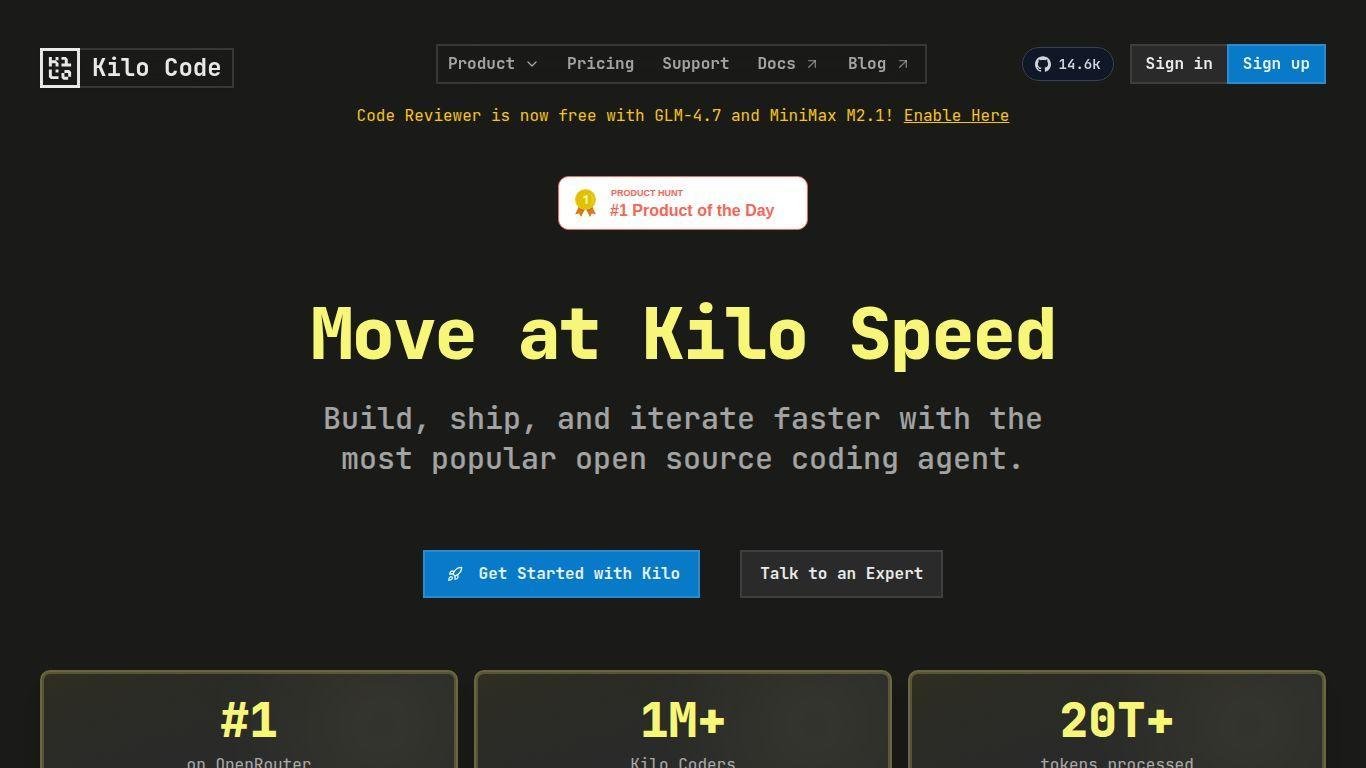
• Kilo Code is an open-source AI coding agent for VS Code and JetBrains IDEs.
• It offers developers freedom, flexibility, and automation without hidden fees or vendor lock-in.
• Supports over 400 AI models, including hosted, local, or bring-your-own-key options.
• Features specialized agent modes: Orchestrator, Architect, Code, and Debug for comprehensive project management.
• Key capabilities include hallucination-free coding, automatic error recovery, context management, and a persistent memory bank.
• Aims to reduce repetitive work while ensuring reliable code generation.
• Supported by an active open-source community, it combines powerful defaults with extensive customization.
Open-source and free with no vendor lock-in
Works inside VS Code and JetBrains IDEs
Supports 400+ AI models, including free and local models
Orchestrator mode to break down complex tasks into subtasks
Specialized agent personas: Architect, Code, and Debug modes
Automatic error detection and recovery during execution
Hallucination-free coding via documentation lookups
Persistent memory bank to retain project context and preferences
Fully customizable prompts, providers, and workflows
Transparent usage-based pricing with optional team and enterprise plans

What is Kilo Code?
Kilo Code is an open-source AI coding agent for VS Code and JetBrains IDEs that automates development tasks while keeping you in control of models and workflows.
Is Kilo Code free to use?
Yes. The open-source version is free forever with no restrictions. Paid Team and Enterprise tiers add management, analytics, and priority support.
Which AI models does Kilo Code support?
It supports over 400 hosted, free, and local models. You can also bring your own API key for providers like OpenAI or Anthropic.
What makes Kilo different from other AI coding tools?
Kilo avoids vendor lock-in, provides transparent pricing, allows full customization, and introduces orchestrator and debug modes for end-to-end project management.
Can teams and enterprises use Kilo Code?
Yes. Teams can subscribe for centralized billing, usage analytics, and collaboration features, while Enterprise customers get SSO, audit logs, and SLA-backed support.