

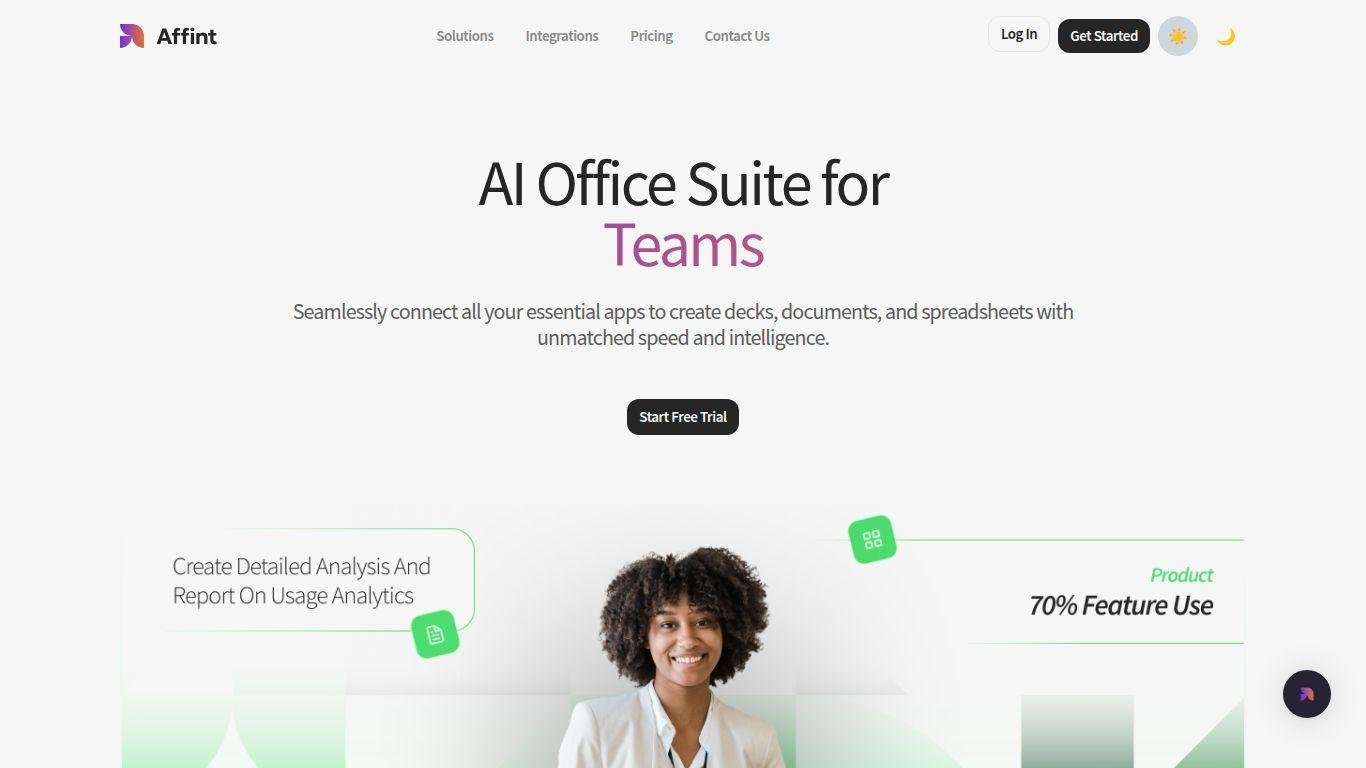
• Affint is an AI-powered office suite aimed at organizing fragmented information into structured outputs like reports and presentations.
• It helps teams minimize time spent on searching, organizing, and recreating existing knowledge through intelligent automation and multi-agent workflows.
• The platform includes AI agents that analyze context, consolidate data from various sources, and manage cross-tool workflows.
• Affint converts scattered content into actionable deliverables quickly while ensuring consistency across projects.
• It aims to create a unified workspace for connecting tools, managing workflows, and automatically producing business-ready materials.
• The combination of data processing, automation, and collaborative AI assistance positions Affint as an AI-native productivity environment that enhances efficiency for individuals and teams.
AI-powered document, slide, and report generation
Multi-agent AI workflows for task automation
Context-aware analysis of scattered information
Automated structuring of business content
Integration with multiple tools and workflows
Unified workspace for collaboration
Live data processing and transformation
Workflow orchestration across platforms
Automated updates across documents and assets
Productivity optimization through intelligent automation

What is Affint?
Affint is an AI-native office suite that transforms fragmented information into structured outputs like reports, presentations, and documents.
How does Affint differ from traditional AI writing tools?
Unlike simple generators, Affint uses collaborative AI agents to coordinate workflows, process context, and automate multi-step tasks.
Who is Affint designed for?
It is designed for professionals, teams, and organizations that manage large amounts of information and want to automate content creation and workflow management.
Can Affint integrate with other tools?
Yes, the platform is built to connect with external tools and workflows to centralize information and streamline processes.
What problems does Affint solve?
It reduces time spent organizing data, recreating documents, and managing scattered knowledge by turning information into structured outputs automatically.