

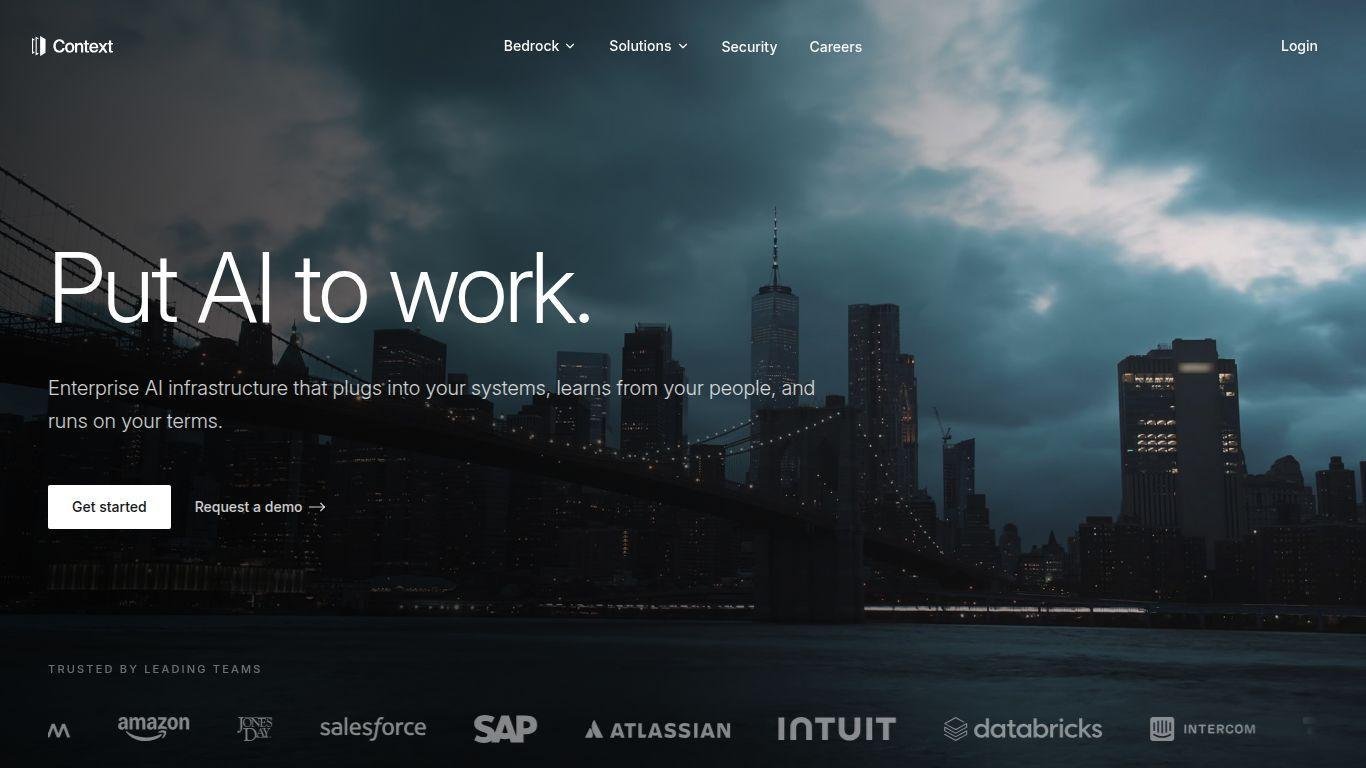
• Context is an AI-powered workspace that integrates tools, data, and workflows into one environment.
• The platform enables AI agents to collaborate using the same context and systems as human teams.
• It connects internal and external applications to facilitate execution of complex tasks across various formats such as documents, codebases, spreadsheets, and presentations.
• A core feature is the context engine that automatically ingests organizational knowledge, including documentation and operational data.
• This allows AI agents to comprehend business processes, definitions, and expectations, ensuring outputs align with institutional standards.
• The workspace accommodates multiple models and agent configurations under a single subscription, offering flexibility for teams.
• By maintaining persistent context across applications, Context ensures continuity and produces traceable outputs based on enterprise data.
• The goal is to reduce fragmentation from switching tools by providing a unified environment for content generation, information analysis, workflow automation, and collaboration.
AI-powered unified workspace integrating tools and workflows
Automatic ingestion of organizational knowledge and documentation
Persistent contextual memory across applications and tasks
Support for multiple AI models and agent configurations
Enterprise-grade connectors for internal and external systems
Automated creation of documents, presentations, spreadsheets, and analysis outputs
Institutional intelligence engine aligned with business processes
Workflow automation across complex multi-step operations
Traceable and consistent outputs grounded in enterprise data
Enterprise deployment options with governance and scalability

What is Context?
Context is an AI workspace that integrates organizational tools and data into one platform where AI agents can execute tasks using real business context.
How is Context different from standard AI assistants?
Unlike standalone assistants, Context connects to internal systems and maintains persistent organizational knowledge, enabling deeper workflow automation.
What types of work can be automated?
The platform can generate documents, perform data analysis, create presentations, manage workflows, and support complex enterprise tasks.
Does Context support multiple AI models?
Yes. Users can select preferred models, agents, and execution frameworks depending on their needs.
Who is Context designed for?
It is primarily built for teams and enterprises seeking scalable AI automation aligned with their operational processes.